
欢迎访问南京市中山陵园管理局网站

亭,是一种公共建筑,它安放了人们复杂的情感。在漫长的时间里,中国人在亭子里迎来送往,休憩时治愈疲惫、分别时寄存不舍、重逢时释放欢愉。
“与谁同坐?明月、清风、我。”正如苏东坡的诗句所描述的那样,没有“我”的在场,亭子就失去了灵魂。
A pavilion is more than just a structure; it holds the emotions and stories of those who visit it. Over centuries, the Chinese have used pavilions to greet and bid farewell, to rest and recover, to contain sorrow in parting, and to share joy in reunion.
As the poet Su Dongpo once wrote: “With whom do I sit? The bright moon, the gentle breeze, and I.” Without “I,” a pavilion loses its soul.
沿着陵园路走向钟山风景区深处,尽管有郁郁葱葱的梧桐的遮蔽,在这段上坡路步行,始终是对体能的考验。如果你在这条梧桐大道的尽头想要找个休息的场所,行健亭便会映入你的眼帘。
Walking along Lingyuan Lu into the heart of Zhongshan Mountain National Park, the shaded plane trees offer a respite for the eyes, yet the uphill path remains a test of stamina. At the end of this avenue, Xingjian Pavilion comes into view, offering a perfect place to rest.
行健亭位于钟山风景区陵园路与明陵路的交汇处,它的名字取自《周易》“天行健,君子以自强不息。”中山陵建成后,为把中山陵园建设成全国性的自然公园,当时的总理陵园管理委员会兴建了一批纪念性建筑,行健亭就是其中之一。
Located at the intersection of Lingyuan Lu and Mingling Lu, Xingjian Pavilion takes its name from The Book of Changes: “Just as heaven keeps moving forward vigorously, a man of virtue should strive continuously to strengthen himself.” After the construction of Sun Yat-sen Mausoleum, the then mausoleum management committee built several commemorative structures to shape the mausoleum into a national-scale natural park — Xingjian Pavilion is one of them.
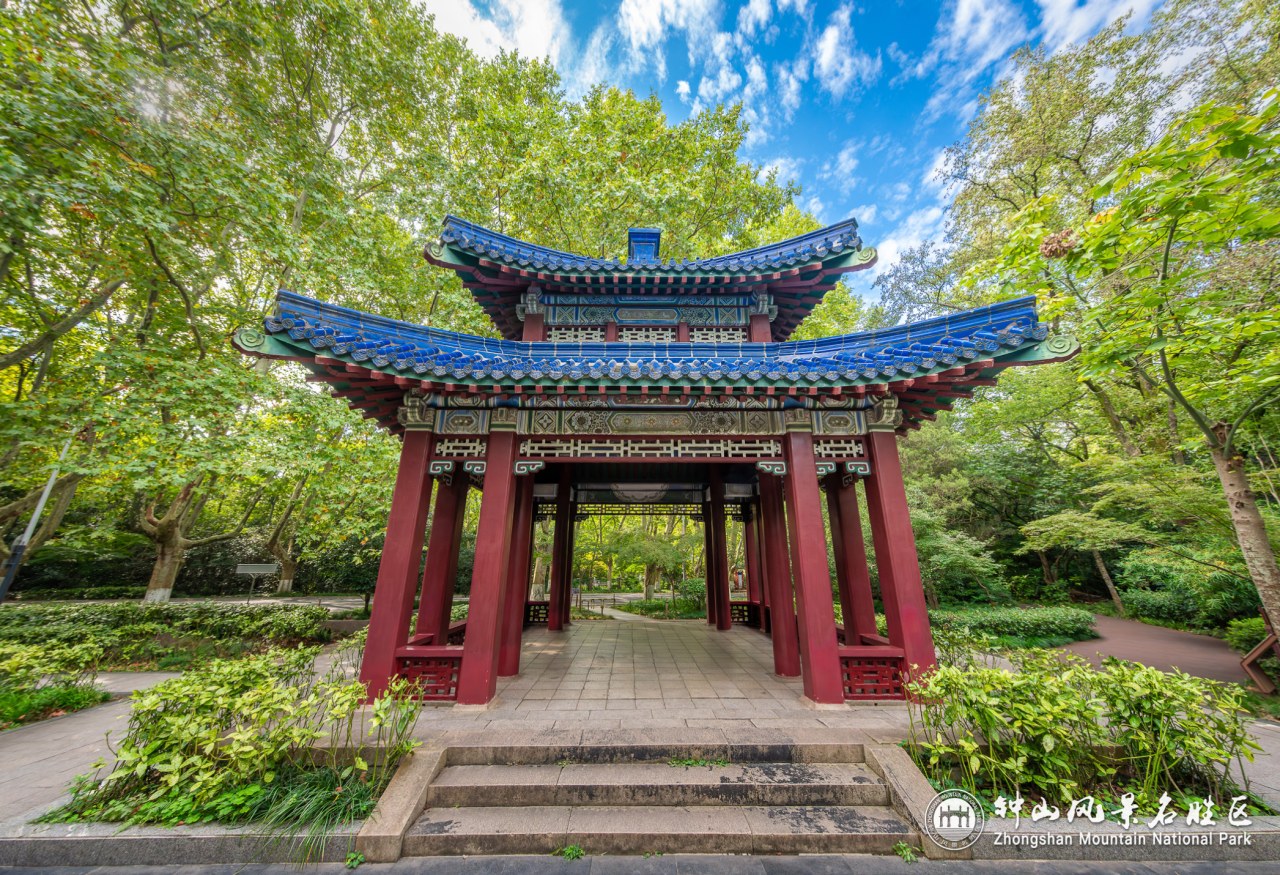
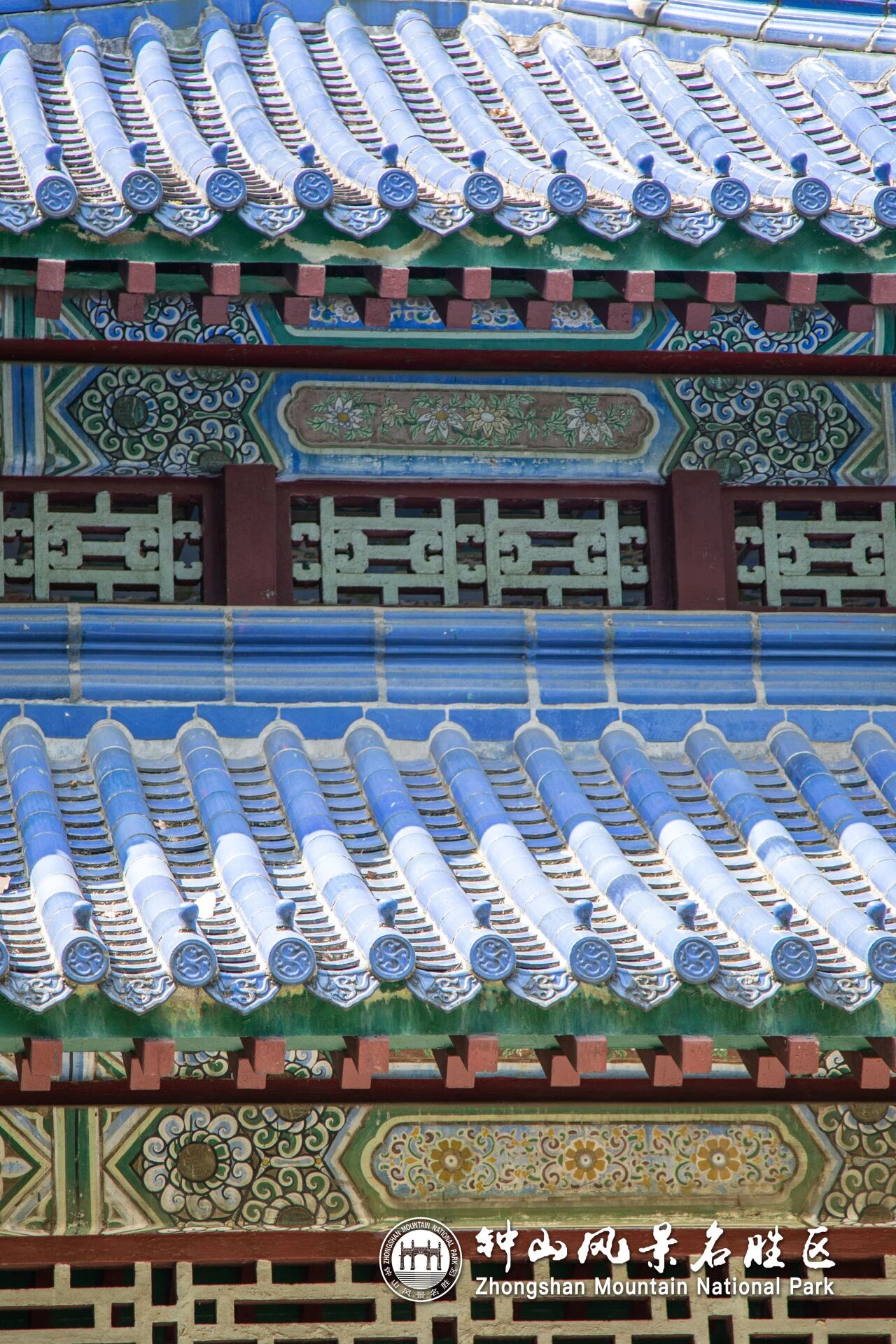
该亭由著名建筑师赵深设计,王竞记营造厂承建,1933年夏落成。行健亭与中山陵园整体的建筑风格保持一致,属于中式西方亭。亭子平面为方形,边长9.3米,高12米,重檐四角攒尖顶,上覆蓝色琉璃瓦。亭内设16根红色立柱,额枋、横梁、雀替都饰以彩绘,藻井为四方形,方格内饰四角如意纹。沿柱设红色坐栏,高0.4米,便于游人坐憩。
The pavilion was designed by the renowned architect Zhao Shen (Chao Shen) and built by the Wang Jing Construction Factory, completed in the summer of 1933. Harmonizing with the overall architectural style of the mausoleum, it is a Chinese-Western fusion pavilion. Its layout is square, 9.3 meters per side, 12 meters high, with a four-sided, double-eaved pointed roof covered in blue glazed tiles. Inside, 16 red pillars support the structure, while the architraves, beams, and bracket sets are all adorned with colorful painted decorations. The square coffered ceiling features ruyi motifs in each corner of its panels. Low red seating rails, about 0.4 meters high, run along the pillars, offering visitors a comfortable place to sit and rest.
行健亭建成之初以木结构为主,经过数次维修之后,部分木构件被水泥结构所替代,稳固性得到提升。现在的行健亭,俨然梧桐大道上一处美景。
Originally constructed mainly of wood, parts of the pavilion have been replaced with reinforced concrete over multiple renovations, improving its stability. Today, Xingjian Pavilion stands as a beautiful landmark along the plane tree avenue, a serene stop for travelers.

文保名称Name:中山陵附属建筑 行健亭
Xingjian Pavilion, Sun Yat-sen Mausoleum auxiliary structure
保护级别Protection Status:南京市文物保护单位(第三批)
Nanjing Municipal Protected Cultural Relic Unit (third batch)
年代Period:1931
类别Category:近现代重要史迹及代表性建筑
Modern Important Historical Site and Representative Architecture
地理位置Location:玄武区钟山风景区内
Zhongshan Mountain National Park, Xuanwu District, Nanjing
核心价值Significance:中国传统建筑文化传承与创新的实物见证
A tangible witness to the inheritance and innovation of Chinese traditional architecture


