
欢迎访问南京市中山陵园管理局网站
在贵州省平塘县,一台名为“中国天眼”的500米口径的球面射电望远镜(FAST)坐落在大山之间,宛若天成。这是全球规模最大、灵敏度最高的单口径射电望远镜。浪漫而又理性的中国人,用它观测宇宙,发现规律。
Nestled among the mountains of Pingtang County in China’s southwestern Guizhou Province stands the Five-hundred-meter Aperture Spherical Radio Telescope (FAST), better known as the “China Sky Eye.” Blending seamlessly into the surrounding landscape, it is the world’s largest and most sensitive single-dish radio telescope. With curiosity and scientific rigor, generations of Chinese astronomers have used such instruments to observe the universe and uncover its underlying laws.

500米口径的球面射电望远镜(FAST)
Five-hundred-meter Aperture Spherical radio Telescope
其实,中国人对太空的好奇与追问从未停歇,古代中国曾长期是天文现象最精确的观测者。位于南京第三高峰的南京市紫金山天文台博物馆,收藏了三台明代天文仪器和两台清代天文仪器,它们见证了中国古代天文事业的辉煌。
Yet China’s fascination with the cosmos is nothing new. For centuries, Chinese astronomers were among the world’s most meticulous observers of celestial phenomena. At the Purple Mountain Observatory Museum, perched on Nanjing’s third-highest peak, five historic astronomical instruments—three from the Ming Dynasty (1368-1644) and two from the Qing Dynasty (1644-1911)—bear witness to the remarkable achievements of ancient Chinese astronomy.
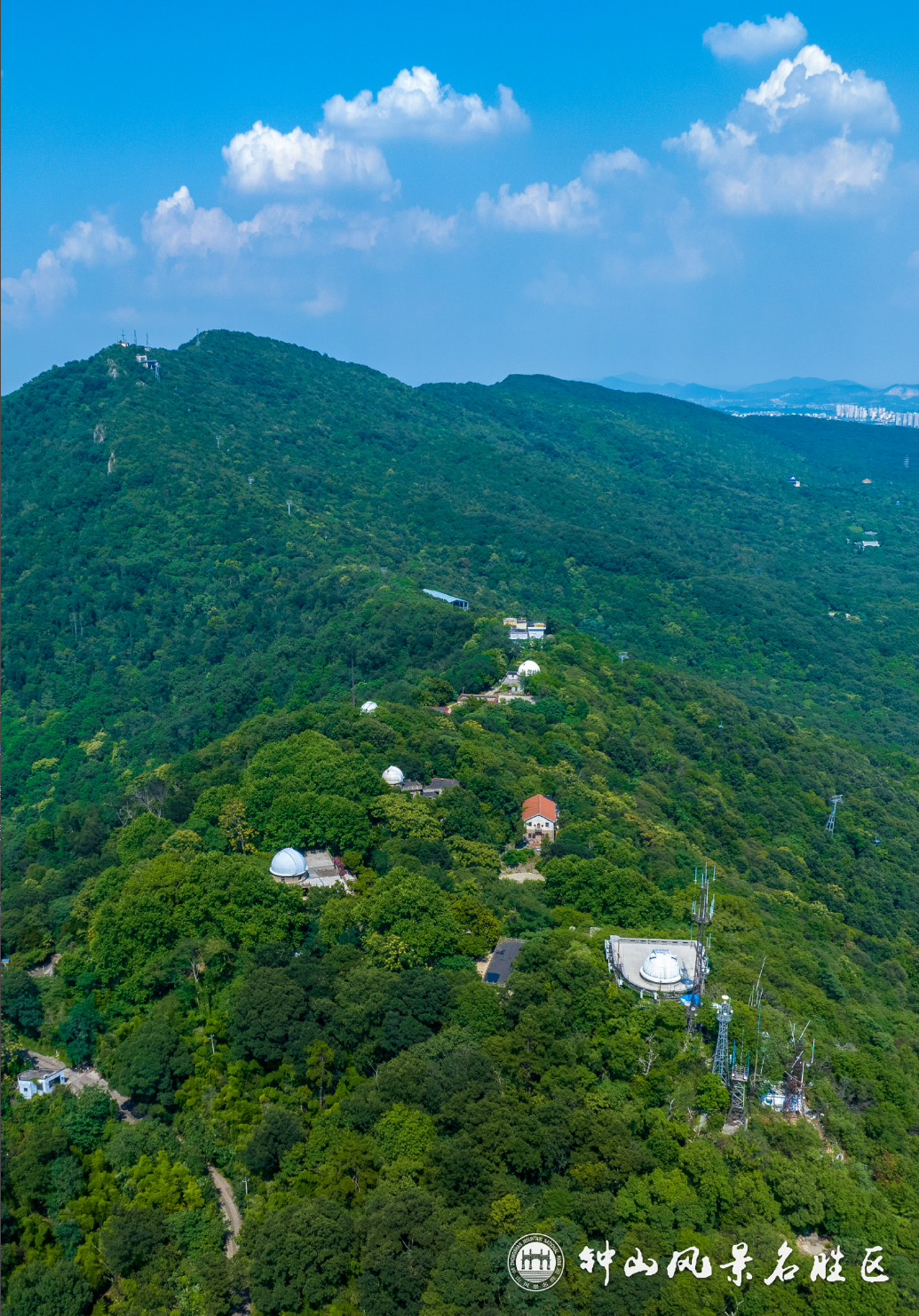
南京市紫金山天文台博物馆
Purple Mountain Observatory Museum
三件明代天文仪器分别是浑仪、简仪、圭表,他们器型硕大、造型精美、测量准确,是传世天文仪器中的精品,在中国乃至世界的天文学发展史上都占有重要地位。
The three Ming Dynasty astronomical instruments are the Armillary Sphere, the Simplified Astronomical Instrument, and the Gnomon and Shadow Board. Impressive in scale, elegant in design, and highly accurate in measurement, they are among the finest surviving astronomical instruments and occupy an important place in the history of astronomy in China and around the world.
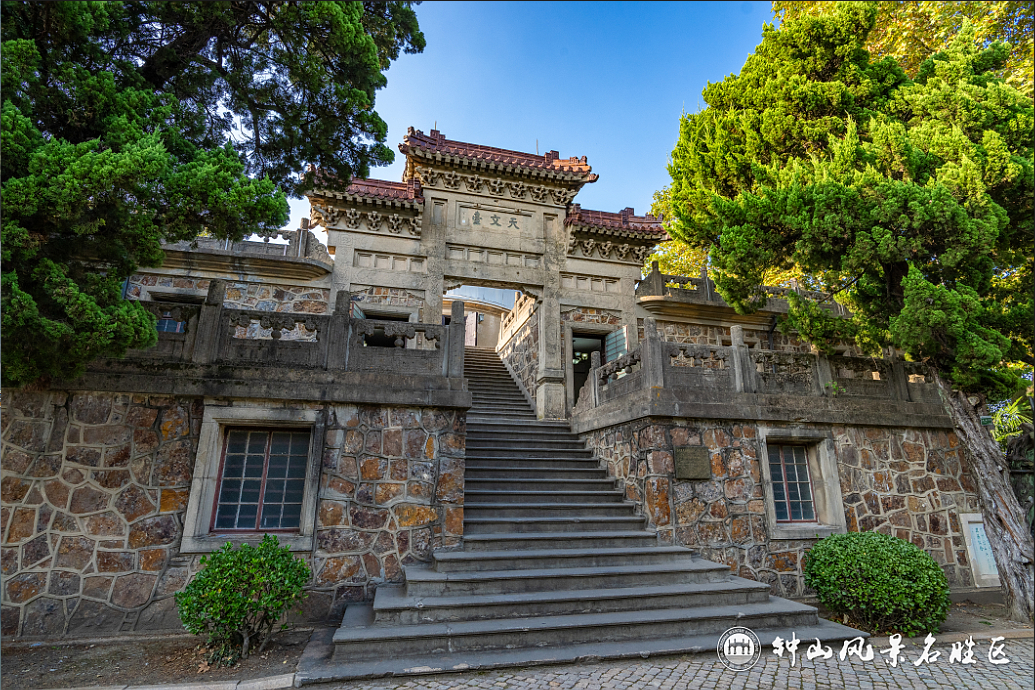
南京市紫金山天文台博物馆
Purple Mountain Observatory Museum
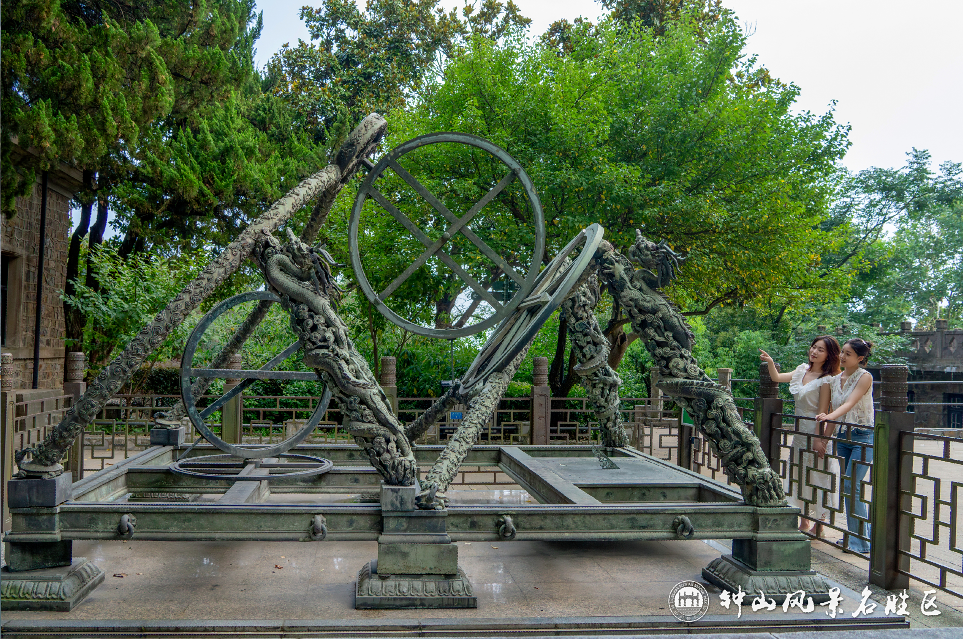
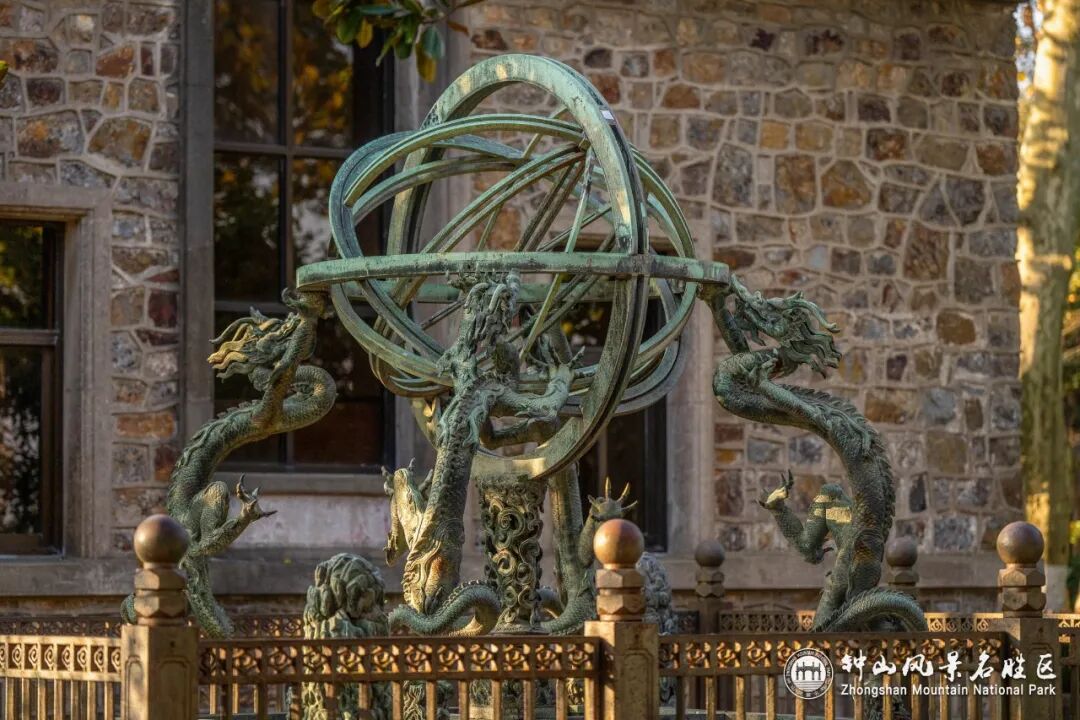
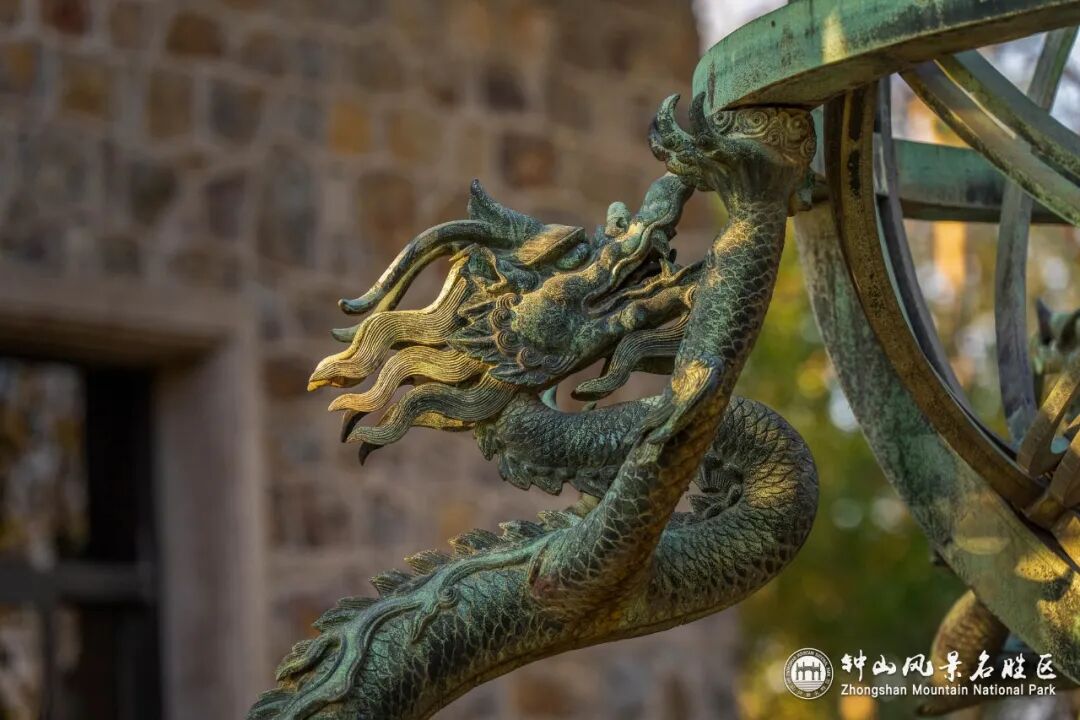
浑仪,古称浑天仪,是用于测量天体位置和运动的仪器,主体由三重铜圆环组成,占地面积约23平方米,通高3.1米。仪器以龟为基础,通过各重环的运转,可以测量出日、月、五星(金、木、水、火、土)以及恒星的位置。
The Armillary Sphere, known in ancient times as the huntianyi, was used to measure the positions and movements of celestial bodies. Its main structure consists of three concentric bronze rings and stands 3.1 meters high, covering an area of approximately 23 square meters. Mounted on a bronze turtle-shaped base, the instrument’s rotating rings enabled astronomers to determine the positions of the sun, moon, the five visible planets—Mercury, Venus, Mars, Jupiter, and Saturn—as well as the fixed stars.
简仪,也是测量天体的仪器,因对浑仪的简化而得名,由立运仪、四游仪、赤道仪、日晷四部分组成,占地面积约13平方米,通高2.65米。仪器改进了浑仪的复杂圆环,各环组分别架立,可以测出赤道坐标、地平坐标,并配以当时的时刻。
The Simplified Astronomical Instrument was also used for celestial observation. It was developed as a simplified version of the more complex armillary sphere. It consists of four components: the Vertical Motion Instrument, the Four-Wander Instrument, the Equatorial Instrument, and a sundial. The structure occupies about 13 square meters and stands 2.65 meters high. By simplifying and separating the armillary sphere’s multiple rings into individual assemblies, the instrument could accurately determine both equatorial and horizontal coordinates, together with the corresponding time of observation.
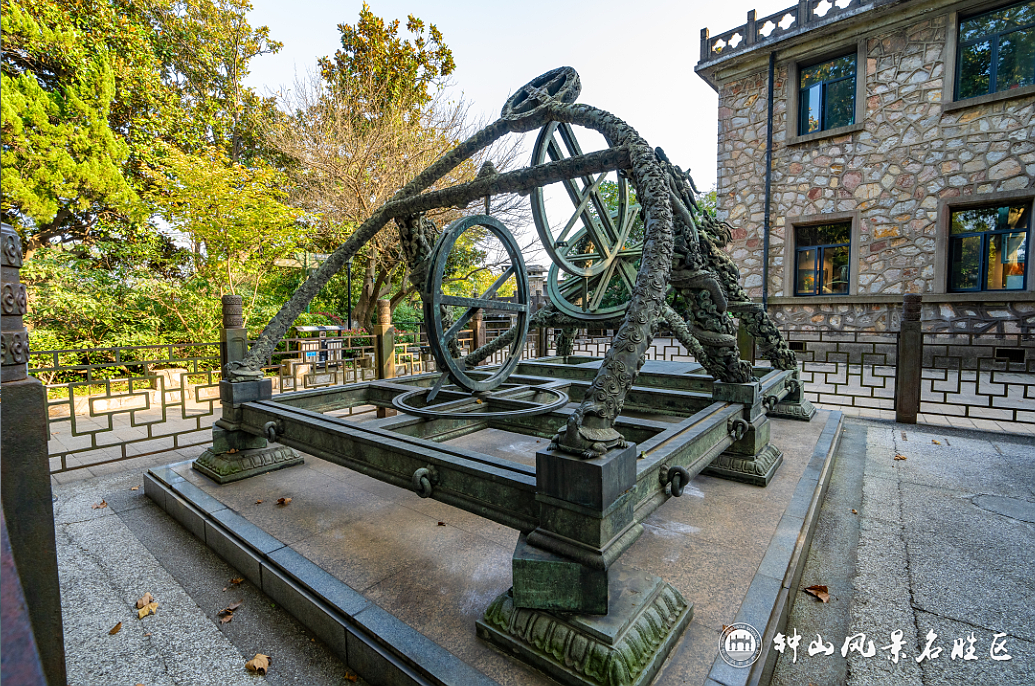
简仪是元代天文学家郭守敬在结构繁复的唐宋浑仪基础上,于公元1276年简化创制的。此件简仪,与上述浑仪一起,是公元1437年(明正统二年)钦天监监正皇甫仲和复制的。简仪的创制,是中国天文仪器制造史上的一大飞跃,也是当时世界先进技术的代表之一。
The Simplified Astronomical Instrument was invented in 1276 by the renowned Yuan Dynasty (1271–1368) astronomer Guo Shoujing as a simplified alternative to the complex armillary spheres of the Tang (618-907) and Song (960-1279) dynasties. The instrument displayed here, together with the armillary sphere described above, was reproduced in 1437 (the second year of the Zhengtong reign of the Ming Dynasty) by Huangfu Zhonghe, director of the Imperial Astronomical Bureau. The creation of the Simplified Astronomical Instrument marked a major breakthrough in the history of Chinese astronomical instrumentation and represented one of the world’s most advanced scientific technologies of its time.
圭表是我国最古老的传统测天仪器之一,此件圭表制造于公元1439年(明正统四年),由卧圭、立表组成。立表上端有一圆孔,正午日光通过此孔投影在圭表上,由日影的变化确定一年四季和二十四节气。
The Gnomon and Shadow Board is one of China’s oldest traditional astronomical instruments. This example was manufactured in 1439 (the fourth year of the Zhengtong reign of the Ming Dynasty) and consists of a horizontal measuring board (gui) and a vertical pillar (biao). Near the top of the pillar is a small circular aperture through which the noon sun casts a spot of light onto the measuring board. By observing changes in the position of the light throughout the year, astronomers could determine the seasons and the 24 solar terms.
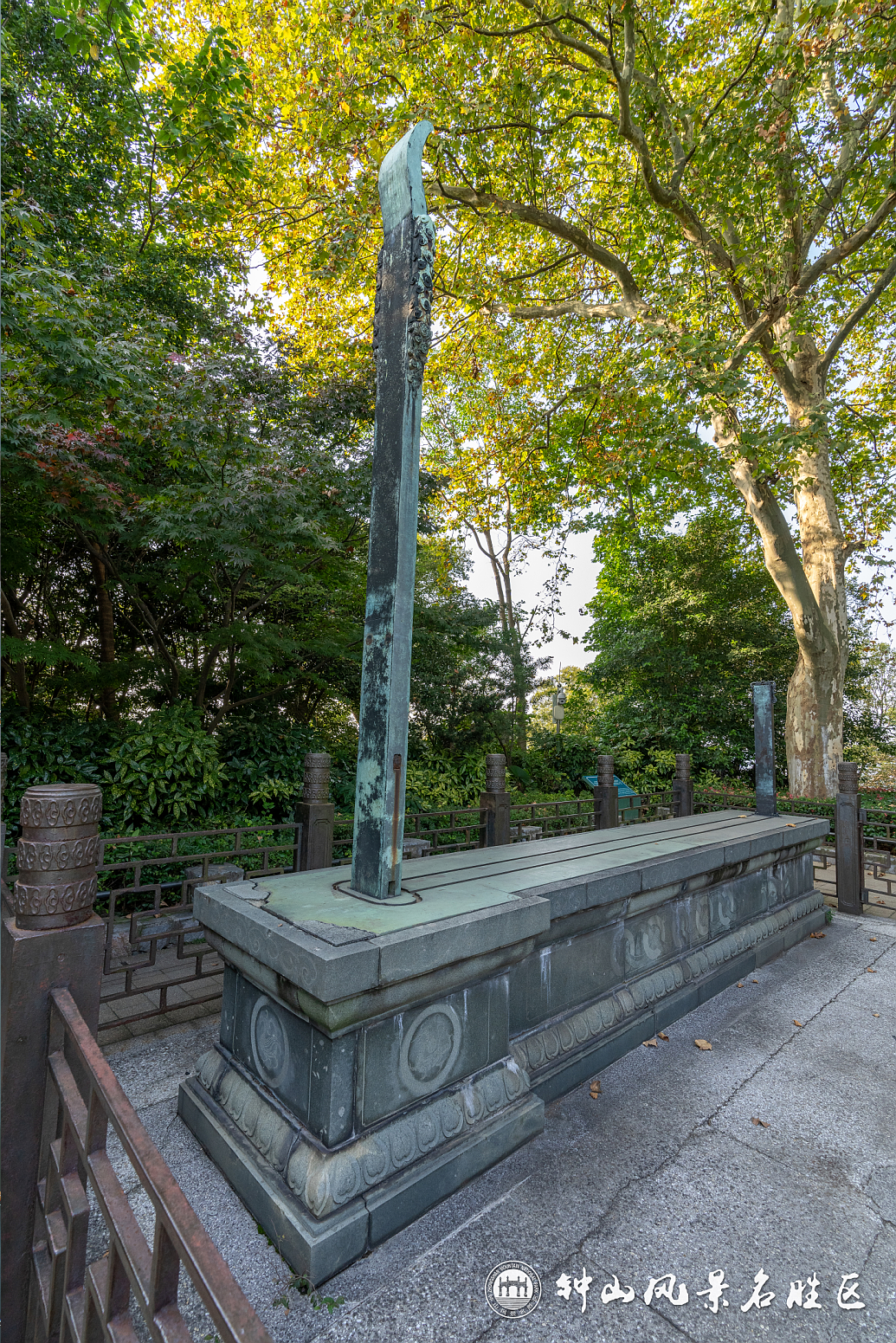
圭表
The Gnomon and Shadow Board
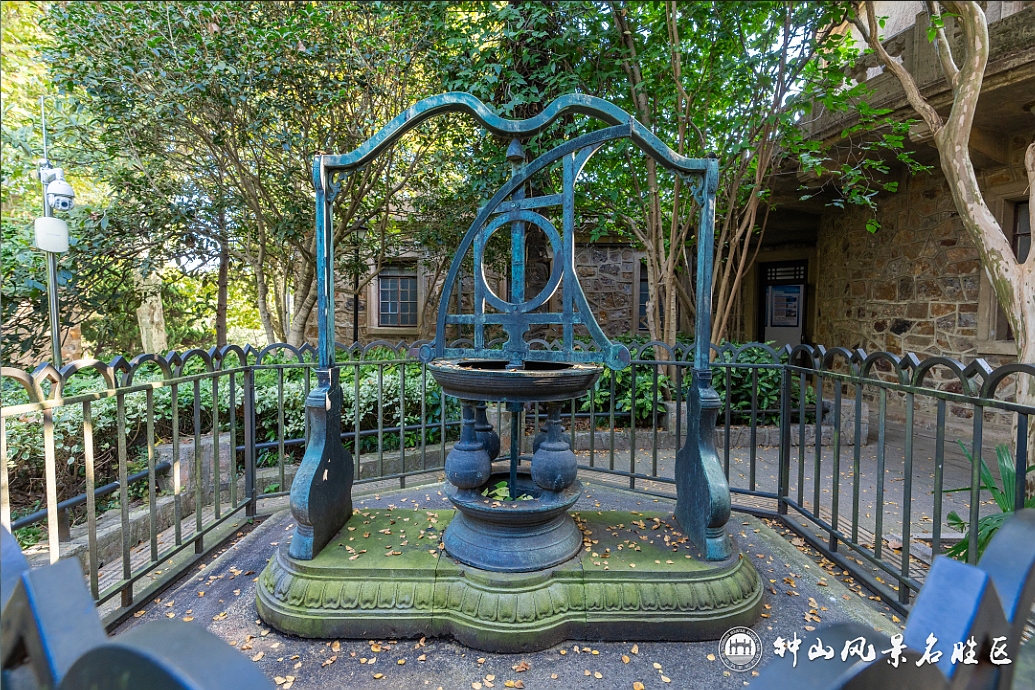
地平经纬仪,测定天体坐标的仪器
Altazimuth Instrument—An instrument used to determine the coordinates of celestial bodies.
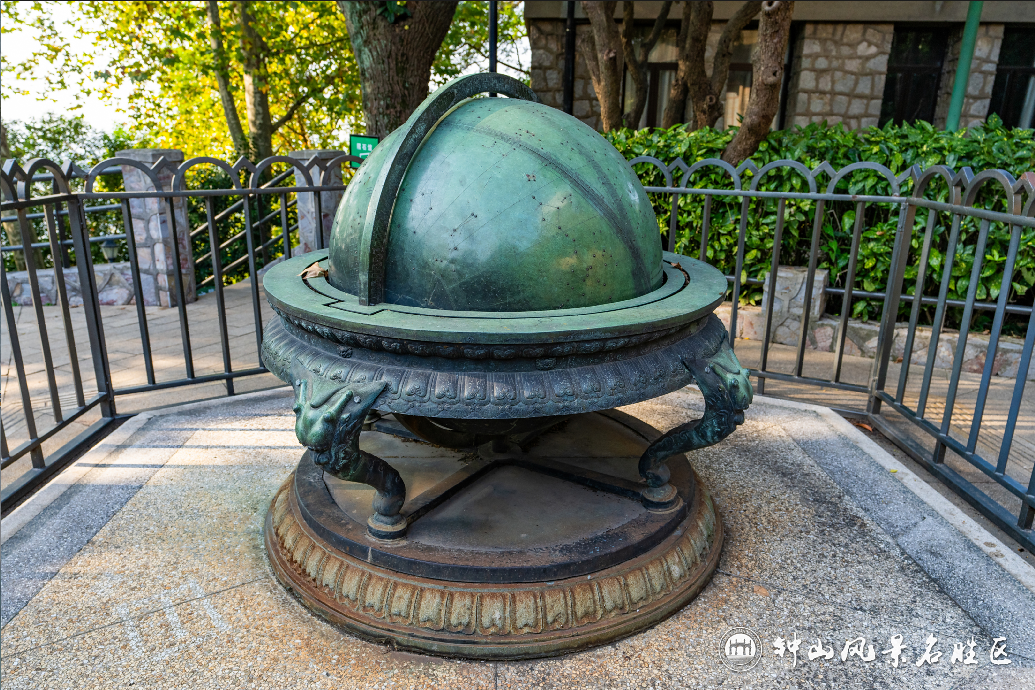
天球仪,表现恒星和星座位置,并能演示天体的周日运动
Celestial Globe—A model of the celestial sphere used to display the positions of stars and constellations and to demonstrate their apparent daily motion across the sky.
明代铸造的浑仪、简仪、圭表,早年安放于南京北极阁观象台,清代被迁往北京古观象台,1934年运回南京。 清代制作的地平经纬仪、天球仪两件天文仪器,同期一同运回南京,五件古天文仪器自此齐聚南京,长期陈列保存。1982年,古天文仪器被公布为第三批江苏省文物保护单位。
The Ming Dynasty Armillary Sphere, Simplified Astronomical Instrument, and Gnomon and Shadow Board were originally installed at the Beiji Ge Observatory in Nanjing. During the Qing Dynasty, they were relocated to the Ancient Observatory in Beijing and were returned to Nanjing in 1934. At the same time, two Qing Dynasty instruments—the Altazimuth Instrument and the Celestial Globe—were also transported back to Nanjing. Since then, all five historic astronomical instruments have been reunited in the city, where they have been preserved and displayed for generations. In 1982, the collection of ancient astronomical instruments was listed as a Jiangsu Provincial Protected Cultural Relic Unit in the third batch of such designations.
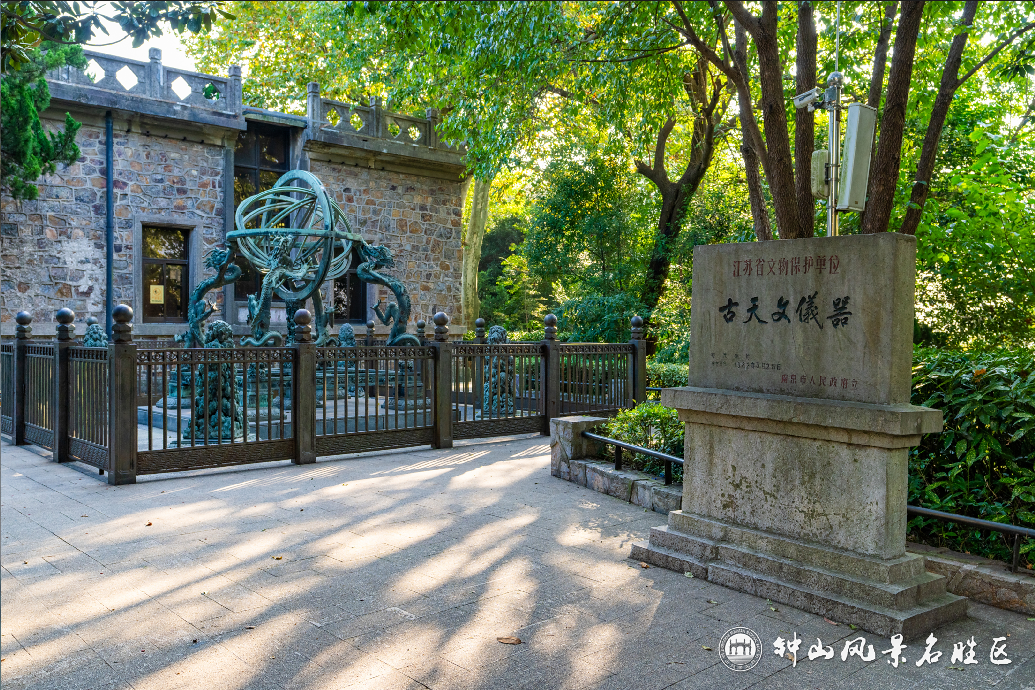

文保名称Name:
古天文仪器
Name: Ancient Astronomical Instruments
保护级别Protection Status:
江苏省文物保护单位(第三批)
Jiangsu Provincial Protected Cultural Relic Unit (third batch)
年代 Period:
明清 Ming-Qing Dynasty
类别 Category:
古建筑
Ancient Architecture
地理位置Location:
紫金山天文台园区内
Purple Mountain Observatory Complex, Nanjing
文字 |姜梦尧
文史专家 |赵子莉
主办单位:中山陵园管理局 支持单位:南京市城市数字治理中心
苏ICP备05004952号-7 苏公网安备32010002010065号
您是本站第 显示网站总访问量 位访客
本站中文域名:中山陵园管理局.公益
本站英文域名:zschina.nanjing.gov.cn


