
欢迎访问南京市中山陵园管理局网站
钟山春信至 繁花次第开
Spring arrives at Zhongshan Mountain, and blossoms begin to unfold across the landscape.
再过一天,3月20日春分恰逢龙抬头。赏罢春花品新茶,便是金陵春日最惬意的打开方式。
This year, the Spring Equinox on March 20 coincides with the traditional Dragon Head-Raising Day, a time that symbolizes the awakening of spring. After admiring the blossoms, savoring a cup of freshly picked tea may be the most delightful way to experience spring in Nanjing.
梅花:暗香浮动的春日序章
The Fragrant Prelude to Spring
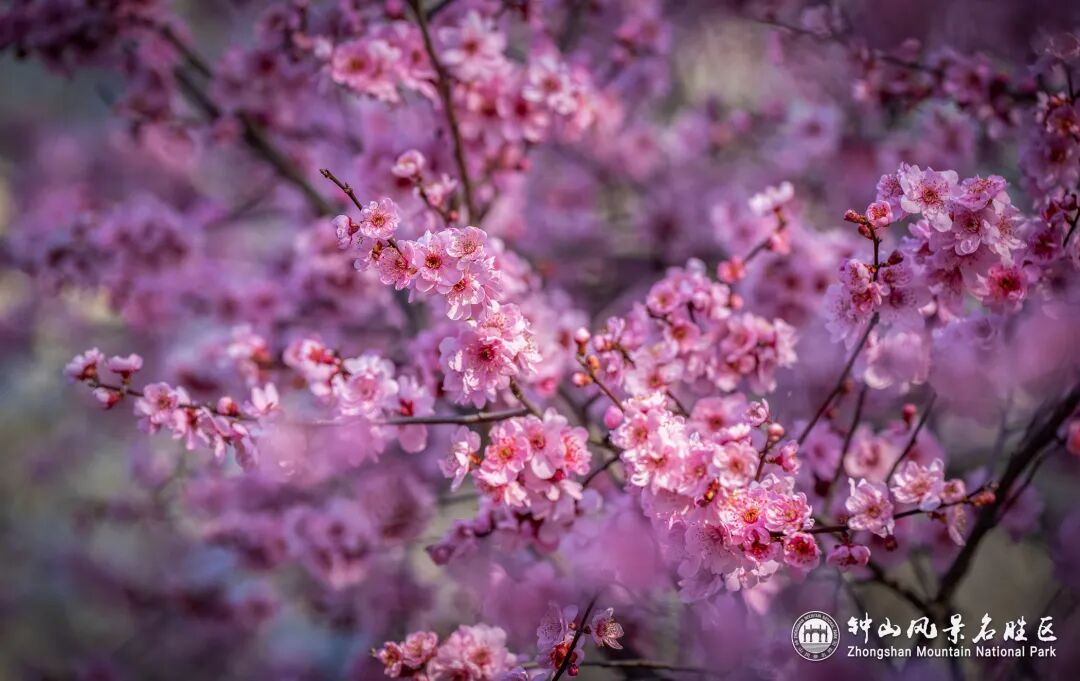
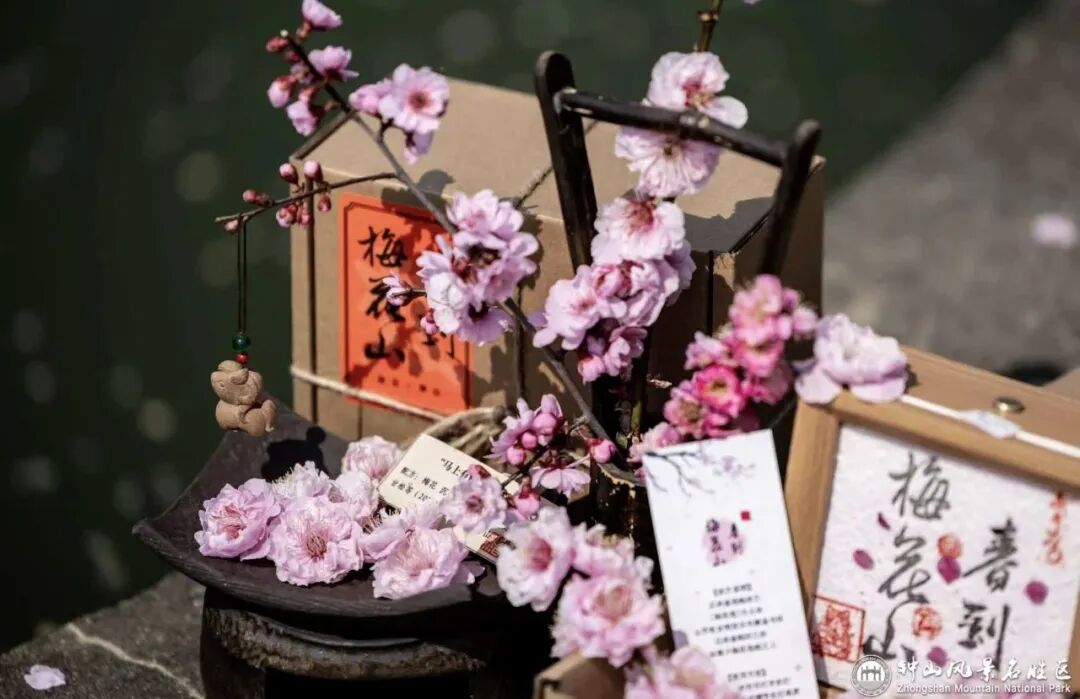
作为钟山春的先行者,梅花山在百花齐放中缓缓谢幕,暗香浮动间宣告春的到来,又在满地落红中悄悄告别,最美是明孝陵“玉见梅好” 赏花路,晚梅与早开的玉兰同框,粉白相映成趣,形成一条玉兰隧道。
As the herald of spring at Zhongshan Mountain, the plum blossoms on Meihua Mountain gently take their leave just as other flowers begin to bloom. Their subtle fragrance announces the arrival of spring before quietly fading as petals scatter across the ground.One of the most beautiful sights can be found along a flower-viewing route near the Ming Xiaoling Mausoleum, where late plum blossoms bloom alongside early magnolias. Their pink and white flowers complement each other, forming a picturesque magnolia tunnel.
玉兰:红墙黄瓦间的玉盏清欢
Elegant Blossoms Against Red Walls and Golden Tiles
古称“辛夷”“木笔” 的玉兰,是春日里自带风骨的君子之花。3月中上旬,从明孝陵7号门步入,穿过清幽神道,便撞见内红门那几株百年玉兰的盛景 ——600年的朱砂红墙厚重沉凝,檐角覆着鎏金琉璃瓦,春风拂过,瓦当滴翠,洁白的玉兰花就斜斜地探过墙头,花瓣如凝脂、似白鸽振翅,在红墙黄瓦的浓艳底色里,生出一种极致清透的雅。
Known in ancient times as xinyi or “wooden brush flowers,” magnolias have long been admired for their dignified elegance. In early to mid-March, visitors entering from Gate 7 of the Ming Xiaoling Mausoleum and walking along the tranquil Sacred Road will encounter several magnificent centuries-old magnolia trees near the Inner Red Gate. Against the backdrop of the 600-year-old vermilion walls and golden glazed roof tiles, the blossoms appear especially radiant. In the spring breeze, the white petals—smooth as jade and shaped as doves in flight—lean gently over the walls, creating a scene of striking purity amid the rich colors of traditional architecture.
玉兰向来花先叶开,光秃秃的深褐枝干上,突兀地缀满饱满的花盏,状如古人所用的毛笔,故有“木笔” 之称。含苞时紧实内敛,盛放时舒展大气,仿佛积攒了一整个寒冬的力量,在春日一夕迸发,藏着 “厚积薄发” 的东方哲思。
Magnolias bloom before their leaves appear. On bare dark branches, large blossoms suddenly emerge, shaped like the calligraphy brushes used by ancient scholars—hence the name “wooden brush.” Tight and reserved in bud, they unfold with grandeur when in bloom, as if releasing the strength gathered throughout the winter—an embodiment of the Eastern philosophy of quiet preparation before achievement.
除了内红门,灵谷景区的玉兰也不容错过,黄墙黛瓦的古寺、雕花的木窗、静默的石栏,与洁白的玉兰花相互映衬,花香漫过禅意庭院,曾被《中国国家地理》盛赞为“江南春日最具禅意的花事”。
Beyond the Inner Red Gate, the magnolias in the Linggu Scenic Area are not to be missed. Ancient temples with yellow walls and dark-tiled roofs, intricately carved wooden windows, and quiet stone balustrades form a serene backdrop for the pure white blossoms. Their fragrance drifts through tranquil, Zen-like courtyards. The scene was once praised by Chinese National Geography as “one of the most Zen-inspired spring flower spectacles in the Jiangnan region.”
二月兰:紫霞漫坡的浪漫与深情
Chinese Violet Cress: A Purple Sea Across the Hills
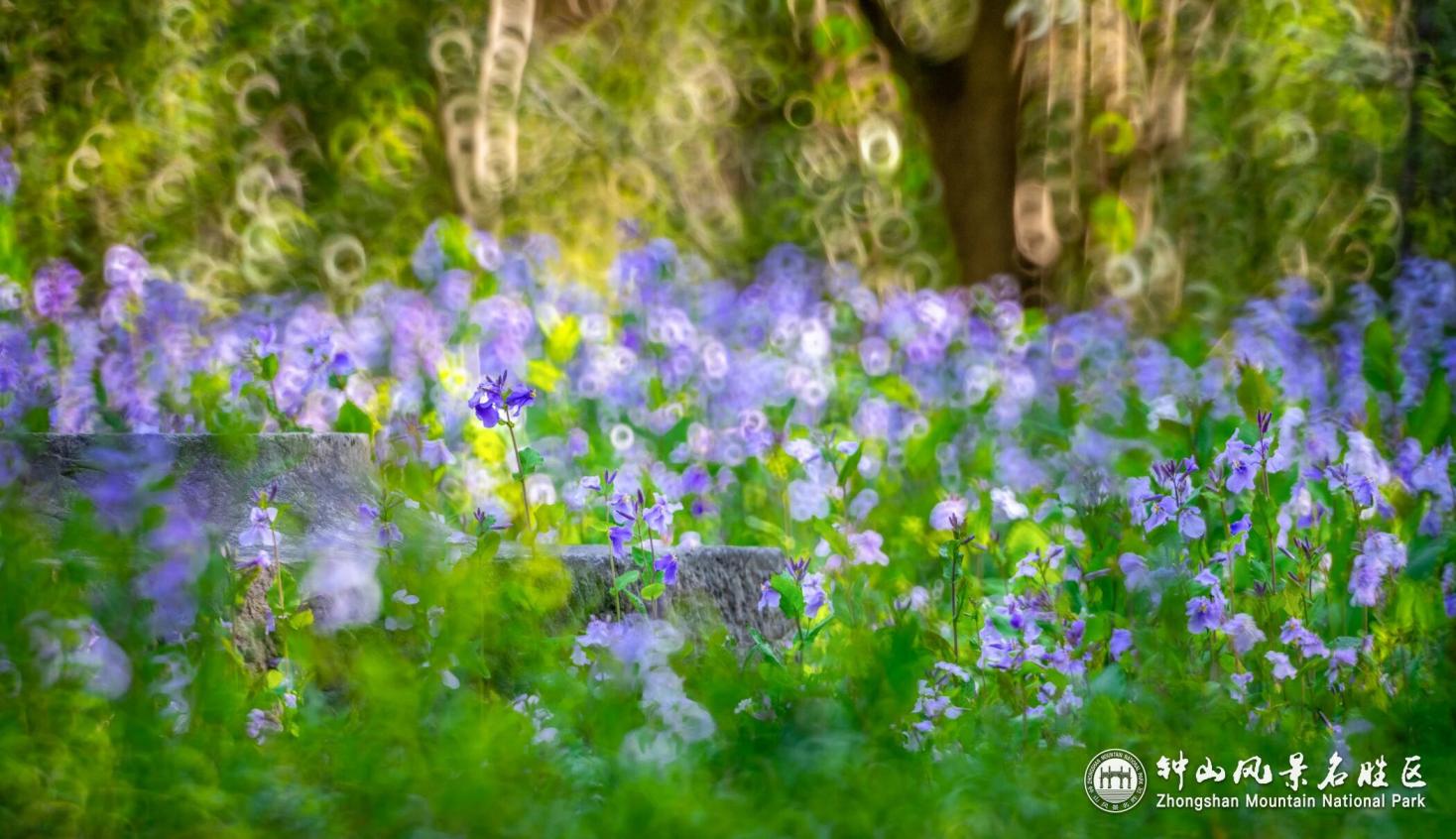
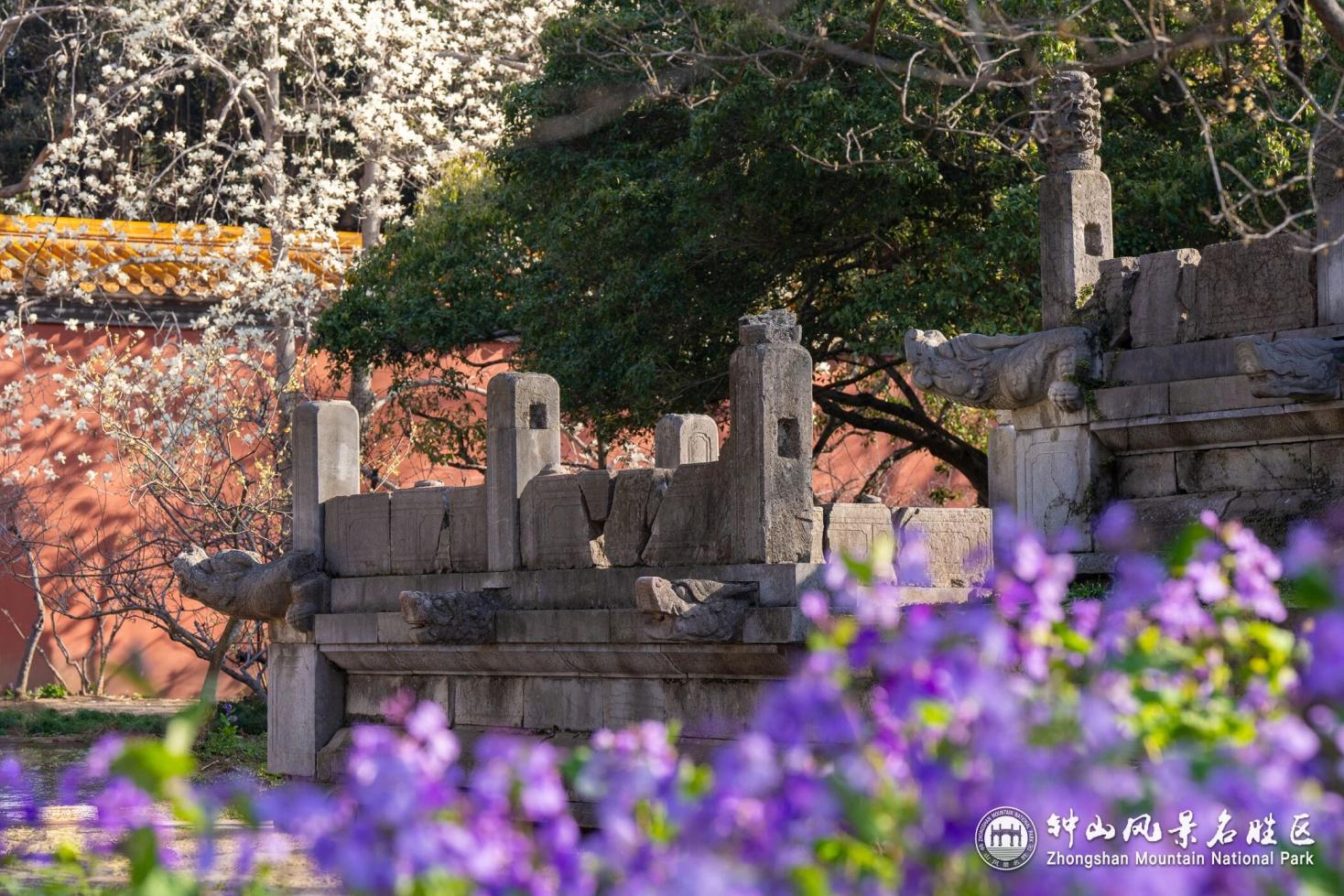
3-4月的钟山,最动人心魄的莫过于二月兰铺就的紫色海洋。明孝陵陵宫的神道两侧、环紫金山绿道的林下溪畔,淡紫色小花如繁星坠落,绵延数里交织成“紫霞漫坡” 的盛景,风吹过便泛起层层涟漪。这种学名 “诸葛菜” 的野花,从不挑剔生长环境,石缝、路边、林下皆能扎根,四瓣小花带着朴素的韧劲。
From March to April, Zhongshan Mountain transforms into a breathtaking sea of Chinese violet cress.Along the Sacred Road of Ming Xiaoling Mausoleum and beneath the forests along the Purple Mountain Greenway, countless pale purple blossoms spread across the hills like fallen stars. Stretching for several kilometers, they create waves of violet that ripple gently in the breeze.
它还有个饱含分量的名字“紫金草”,象征传播和平理念。如今漫步钟山花海,脚下的紫色花毯既是自然的馈赠,也是和平的信使,细碎花瓣里藏着“平凡却坚韧” 的生命哲学。
It also carries another meaningful name, “Zijin Grass,” symbolizing the message of peace. Today, as visitors stroll through the flower fields of Zhongshan Mountain, the purple carpet beneath their feet is not only a gift from nature but also a messenger of peace. Within the delicate petals lies a quiet philosophy of life—ordinary yet resilient.
古亭旁的国色芳华
Timeless Beauty Beside an Ancient Pavilion
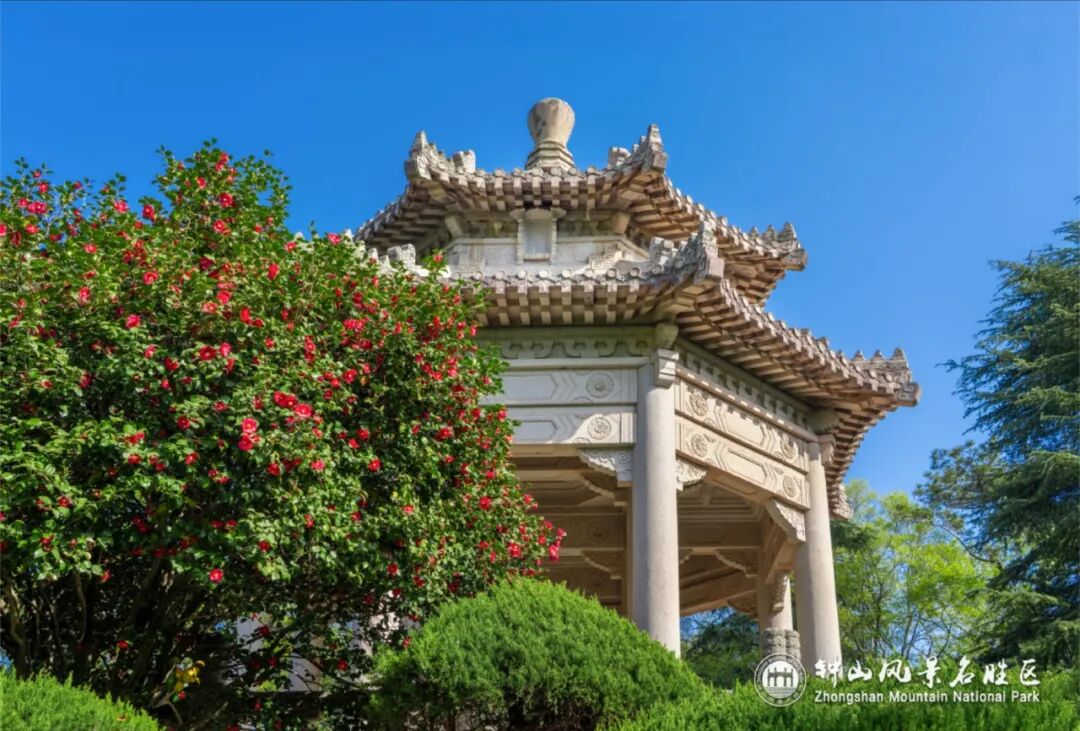
4月春日正盛时,中山陵光化亭旁的百年古山茶迎来花期,艳红花朵缀满枝头,与苍翠枝叶相映,尽显“国色芳华”。作为钟山 “古树名木” 之一,这株古山茶见证着金陵岁月,赏花时更添几分历史厚重感。
In April, when spring reaches its height, the century-old camellia tree near Guanghua Pavilion at the Sun Yat-sen Mausoleum will come into bloom. Brilliant red flowers dot its branches, standing out against deep green leaves in a display of classic elegance. As one of Zhongshan Mountain’s protected ancient trees, the camellia has witnessed the passage of Nanjing’s history, adding a sense of timelessness to the spring scenery.
茶忙,一杯雨花醉春烟
Tea Harvest at the Spring Equinox: Savoring the Taste of Yuhua Tea

作为南京的城市名片,雨花茶源自钟山六朝时钟山便有采茶制茶的记载。这里“林茶间作梅茶共生”的独特环境,让新茶吸饱花香与山林灵气,外形如松针挺拔,色泽翠绿润亮。
Yuhua Tea, one of Nanjing’s most celebrated specialties, originates from Zhongshan Mountain. Records show that tea cultivation here dates back to the Six Dynasties period (220-589). The unique environment—where tea plants grow among forest trees and alongside plum blossoms—allows the leaves to absorb the fragrance of flowers and the vitality of the mountains. Fresh Yuhua Tea resembles slender pine needles in shape and shines with a bright emerald color.
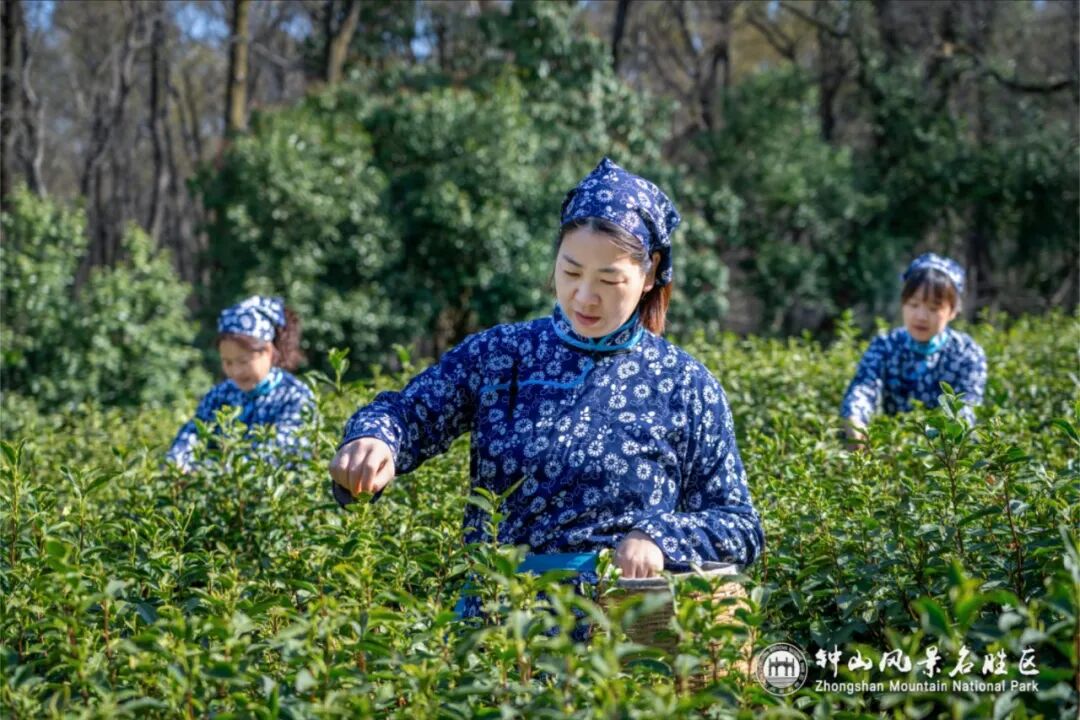
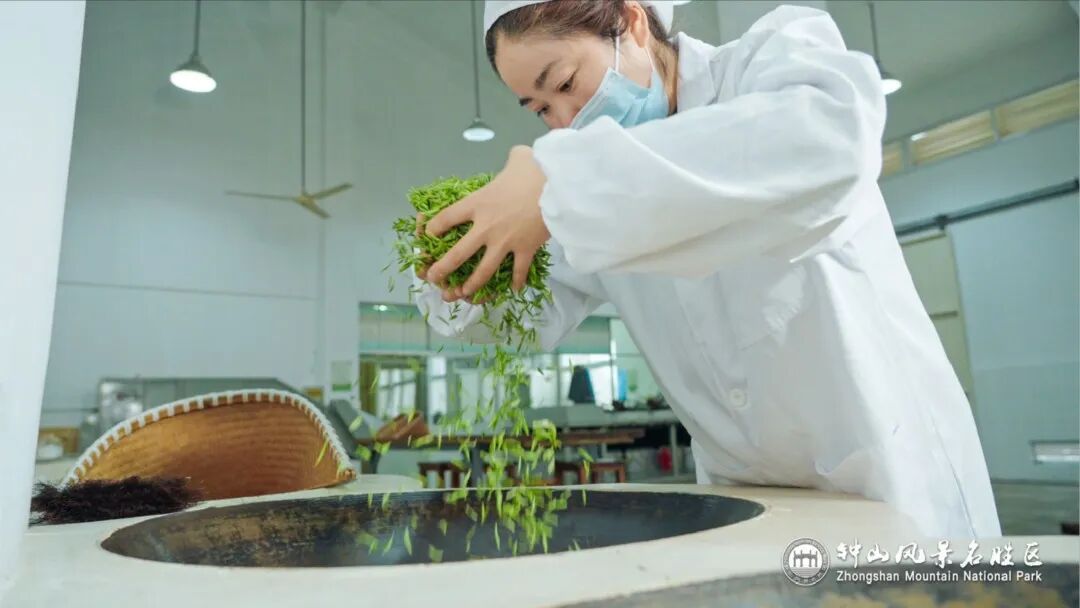
春分时节的雨花茶,是一年中最鲜美的珍品。欢迎来钟山!抿一口热茶,茶香与花香缠绕鼻尖,便是“春味藏于茶,茶里见春天” 的极致雅趣。
Tea harvested around the Spring Equinox is considered the most delicate and flavorful of the year.Come to Zhongshan Mountain, take a sip of freshly brewed tea, and let the aroma of blossoms and tea mingle in the air—an experience that captures the very essence of spring.
春风有信,花开有期,茶有真香。这个春天,赴一场钟山之约,让春花染衣,茶香润心,把金陵最动人的春光藏进记忆里。
Spring arrives as promised.Flowers bloom in their season, and tea reveals its true fragrance.This spring, come to Zhongshan Mountain.Let the blossoms brush your sleeves and the scent of tea warm your heart.And carry the most beautiful moments of Nanjing’s spring in your memory.
主办单位:中山陵园管理局 支持单位:南京市城市数字治理中心
苏ICP备05004952号-7 苏公网安备32010002010065号
您是本站第 显示网站总访问量 位访客
本站中文域名:中山陵园管理局.公益
本站英文域名:zschina.nanjing.gov.cn


